

Text: Eva Slabá
Opening Sep. 15, 2026 / from 6p.m.
16.9.-24.10., 2026

Tereza Kalousová, Sorority, 2026, Photo Eva Rybářová
Clauda is pleased to present a solo show by Tereza Kalousová, with an accompanying text by Eva Slabá.
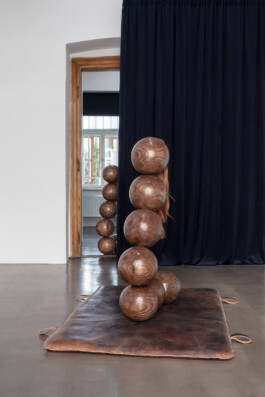
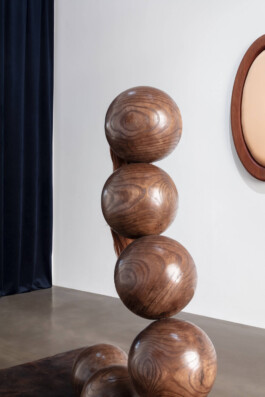
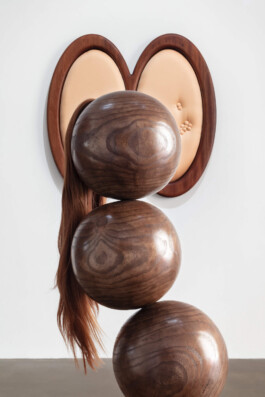
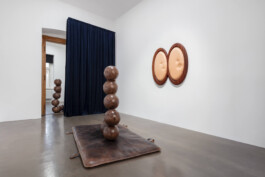
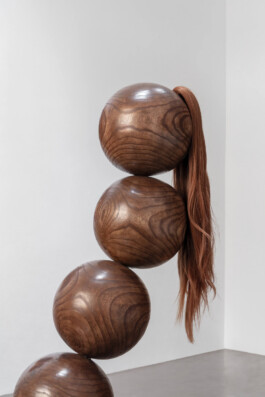
Solid wood, leather mats, glossy strands of hair, upholstery buttons. Tereza Kalousov. invites us into a space that lies beyond the threshold of dizzying everyday life. The morphology of this new series of wall-mounted and freestanding objects, which straddle the line between figure, furniture, and architecture, evokes a nebulous shadow play. The entire scene works carefully with textures in which sharp edges, frayed textile fibers, and rough surfaces have been transformed into a perfectly optimized reality so flawless that it gives the impression of an otherworldly (or futuristic-sacred) experience.
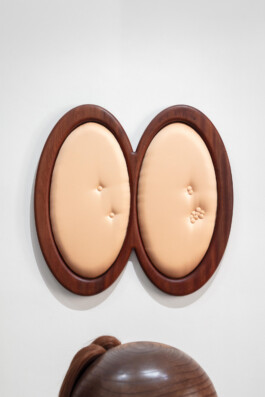
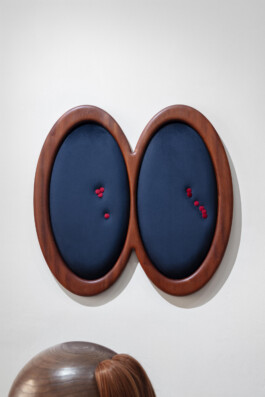
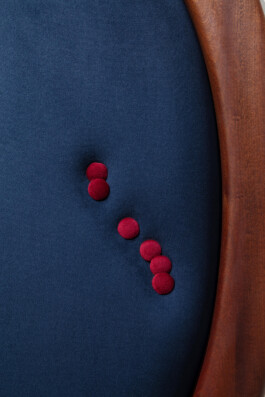
Instead of an aggressive vision of a technological future, Kalousov. and her Sorority offer a refined world based on the meticulous elimination of anything that might disrupt its functioning. The objects within lose their imperfect individuality and are rendered into the nameless anonymity of unified “bodies.” Although the universality of the smooth, rounded shapes, combined with the weight of the material, gives the impression of being ahistorical and unrooted in any particular place, it feels as if I have stepped into a building from New York’s Gilded Age of great economic upheaval—perhaps the Dakota or its cousin, the Osborne. The world of Sorority is defined by the material opulence of walls paneled with expensive wood, the vestiges of a porte-cochère (carriage entrance) in the horsehair stuffing of the mats, and wall objects resembling circular dormers with upholstery buttons that have abandoned the flawless grids of their luxurious velvet seats. Just as the apartments of that era offered their inhabitants comfort and isolation from the grimy streets of New York, the space of Sorority functions as a safe urban incubator.
Like the building in the film Rosemary’s Baby, the interior of the Dakota conceals deeply unsettlingtruths. This installation presents an alluring, at times even delirious reality with a dangerous core—it is an environment that willfully enthralls through the complete absence of friction. The multiple defunct buttons, soft padded shapes, and polished spheres—reminiscent of organic cells or body parts—could move without any weight or resistance at all, as if gliding on a reformer at Joseph Pilates’s very first “Contrology” studio, located just a few blocks away from the aforementioned buildings. The body, furniture, objects, space—in short, everything—gradually merge under the dictates of a single, identical logic. In this space the body is reduced to an inanimate symbol, while the coherent forms of the objects take on an unexpectedly visceral character. And the captivating technology here is not so much a machine as an aesthetic tool—an aesthetic principle.
Cultural theorist Byung-Chul Han shows how this absence of friction (or resistance) leads to apathy and numbness—the body merely glides across the surface, ceasing to be a site of fatigue and pain and becoming a smooth “element” in exchange for its obedience and the loss of its ability to act or freely make decisions. As the author writes in the opening of his book Saving Beauty: “The smooth is the signature of the present time. It connects the sculptures of Jeff Koons, iPhones and Brazilian waxing. Why do we today find what is smooth beautiful? Beyond its aesthetic effect, it reflects a general social imperative. It embodies today’s society of positivity. What is smooth does not injure. Nor does it offer any resistance. It is looking for Like. The smooth object deletes its Against. Any form of negativity is removed.”. The relentless pressure to perform, be flexible, and constantly adapt—which takes its toll on the weary human body—finally finds peace here, in a world where everything is sorted out for us in advance. Friction is replaced with smoothness, exhaustion gives way to wellness, and doubts are assuaged by a harmonious seductiveness. And today these mental frameworks promise the tired individual that much-desired numbness—an “anesthetic” sense of security: “Aestheticization turns out to be anaestheticization; it sedates our perception.”. They promise that if we renounce our chaotic corporeality (represented in the installation by the tamed strands of hair) and merge with a consumer product optimized for immediate gratification and dictated by the system, we will finally find our refuge.
It therefore seems that what we are observing here is a shift from Foucault’s disciplinary power to contemporary neoliberal power, which Han calls “smart” or “friendly” power. “It says ‘yes’ more often than ‘no’; it operates seductively, not repressively. It seeks to call forth positive emotions and exploit them. It leads astray instead of erecting obstacles. Instead of standing opposed to the subject, smart and friendly power meets the subject halfway.”. Here the aesthetics of Sorority intentionally become a performative ritual—historical initiations give way to voluntary submission to rituals of self-optimization. The result is a quiet, visually appealing, and clinically pristine environment with its own set of rules. Accepting the rules of Sorority does not hurt—it is seductive, smells of mahogany, and is soft to the touch. And that is precisely where its destructive nature lies. It is within reach and we are all its PNMs⁴, a sealed invitation in hand. In Han’s words: “Protect me from what I want.”⁵
Eva Slabá
____________________________
1. Byung-Chul Han, Saving Beauty, trans. by Daniel Steuer (Cambridge: Polity, 2018), p. 8.
2. Han, Saving Beauty, p. 13.
3. Byung-Chul Han, Psychopolitics: Neoliberalism and New Technologies of Power, trans. by Erik Butler (Brooklyn: Verso Books, 2017), p. 19.
4. PNM, or Potential New Member, is the official term for any female student who participates in recruitment during Sorority Rush Week and applies for membership in a sorority. The week culminates in Bid Day, when candidates receive an official invitation (Bid) to join the sorority.
5. Han, Psychopolitics, p. 20.
____________________________
BIO:
Tereza Kalousová (1998) is an intermedia artist and architect who has long explored the contradictory aspects of contemporary reality—especially the themes of post-internet alienation, disjointed identity, and the perception of time and space under the influence of technology and power structures. Her interdisciplinary practice seamlessly blends architecture with object art, video installations, and original texts, often resulting in the creation of unsettling situations and environments. Kalousová’s academic background reflects her broad scope: She studied at UMPRUM in Prague (in the Architecture II Studio, supplemented by internships with Maja Smrekar and Sam Lewitt), earned a degree in Architectural Design from the Gerrit Rietveld Academie in Amsterdam, and then continued her studies in the Dirty Art Department at the Sandberg Instituut. She also completed a postgraduate program in the Video Studio at FaVU in Brno, where she is currently pursuing her doctoral studies. Kalousová’s work has been presented extensively both locally and abroad, and her most recent exhibitions include: S4E1 (Portland Gallery, Zurich, 2026), The Cake Is a Lie (Galerie AVU, Prague, 2026), LOVESTORY (City Surfer Office, Prague, 2025), Under the Weather (Galerie FaVU, Brno, 2025), The Spectacle of the Self (De Hallen, Amsterdam, 2025), To the Bone (etc. galerie, Prague, 2025), Presskuchen (PAKT Amsterdam, 2024), and Khora (TIC, Brno, 2023). Her short film Vanilla Sky won the Audience Award in the Other Visions section at the 2025 PAF Olomouc festival, and her video works have been screened in London, New York, and Vienna. In 2026 Kalousová won the Jindřich Chalupecký Award. She lives and works alternately in Prague and Amsterdam.
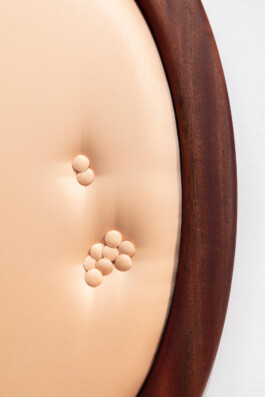
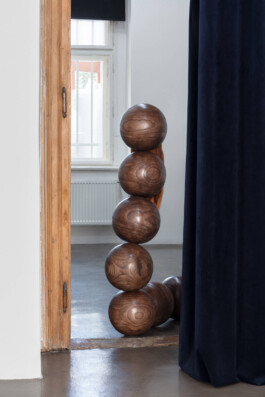
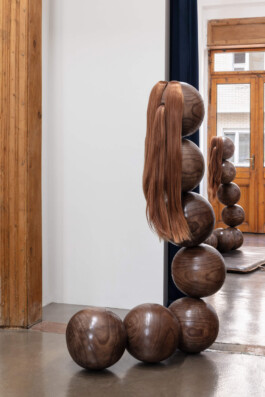
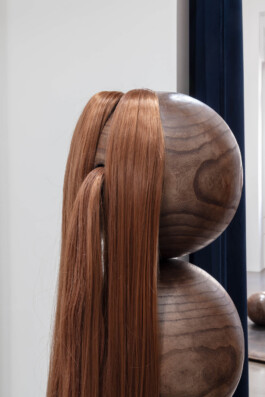
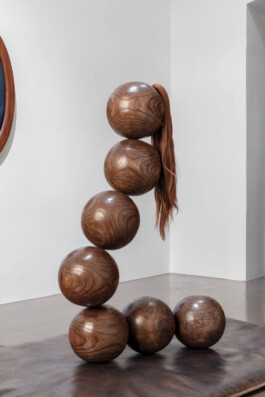
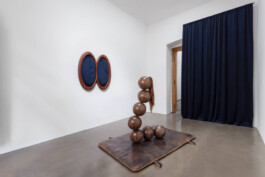
Tereza Kalousová, Sorority, 2026, Photo Eva Rybářová
Tereza Kalousová, Sorority, 2026, Photo Eva Rybářová
Tereza Kalousová, Sorority, 2026, Photo Eva Rybářová
Tereza Kalousová, Sorority, 2026, Photo Eva Rybářová
Tereza Kalousová, Sorority, 2026, Photo Eva Rybářová
Tereza Kalousová, Sorority, 2026, Photo Eva Rybářová
Tereza Kalousová, Sorority, 2026, Photo Eva Rybářová
Tereza Kalousová, Sorority, 2026, Photo Eva Rybářová
Tereza Kalousová, Sorority, 2026, Photo Eva Rybářová
Tereza Kalousová, Sorority, 2026, Photo Eva Rybářová
Tereza Kalousová, Sorority, 2026, Photo Eva Rybářová
Tereza Kalousová, Sorority, 2026, Photo Eva Rybářová
Tereza Kalousová, Sorority, 2026, Photo Eva Rybářová
Tereza Kalousová, Sorority, 2026, Photo Eva Rybářová
Tereza Kalousová, Sorority, 2026, Photo Eva Rybářová
Text: Eva Slabá
Opening Sep. 15, 2026 / from 6p.m.
16.9.-24.10., 2026
Tereza Kalousová, Sorority, 2026, Photo Eva Rybářová
Clauda is pleased to present a solo show by Tereza Kalousová, with an accompanying text by Eva Slabá.
Solid wood, leather mats, glossy strands of hair, upholstery buttons. Tereza Kalousov. invites us into a space that lies beyond the threshold of dizzying everyday life. The morphology of this new series of wall-mounted and freestanding objects, which straddle the line between figure, furniture, and architecture, evokes a nebulous shadow play. The entire scene works carefully with textures in which sharp edges, frayed textile fibers, and rough surfaces have been transformed into a perfectly optimized reality so flawless that it gives the impression of an otherworldly (or futuristic-sacred) experience.
Instead of an aggressive vision of a technological future, Kalousov. and her Sorority offer a refined world based on the meticulous elimination of anything that might disrupt its functioning. The objects within lose their imperfect individuality and are rendered into the nameless anonymity of unified “bodies.” Although the universality of the smooth, rounded shapes, combined with the weight of the material, gives the impression of being ahistorical and unrooted in any particular place, it feels as if I have stepped into a building from New York’s Gilded Age of great economic upheaval—perhaps the Dakota or its cousin, the Osborne. The world of Sorority is defined by the material opulence of walls paneled with expensive wood, the vestiges of a porte-cochère (carriage entrance) in the horsehair stuffing of the mats, and wall objects resembling circular dormers with upholstery buttons that have abandoned the flawless grids of their luxurious velvet seats. Just as the apartments of that era offered their inhabitants comfort and isolation from the grimy streets of New York, the space of Sorority functions as a safe urban incubator.
Like the building in the film Rosemary’s Baby, the interior of the Dakota conceals deeply unsettlingtruths. This installation presents an alluring, at times even delirious reality with a dangerous core—it is an environment that willfully enthralls through the complete absence of friction. The multiple defunct buttons, soft padded shapes, and polished spheres—reminiscent of organic cells or body parts—could move without any weight or resistance at all, as if gliding on a reformer at Joseph Pilates’s very first “Contrology” studio, located just a few blocks away from the aforementioned buildings. The body, furniture, objects, space—in short, everything—gradually merge under the dictates of a single, identical logic. In this space the body is reduced to an inanimate symbol, while the coherent forms of the objects take on an unexpectedly visceral character. And the captivating technology here is not so much a machine as an aesthetic tool—an aesthetic principle.
Cultural theorist Byung-Chul Han shows how this absence of friction (or resistance) leads to apathy and numbness—the body merely glides across the surface, ceasing to be a site of fatigue and pain and becoming a smooth “element” in exchange for its obedience and the loss of its ability to act or freely make decisions. As the author writes in the opening of his book Saving Beauty: “The smooth is the signature of the present time. It connects the sculptures of Jeff Koons, iPhones and Brazilian waxing. Why do we today find what is smooth beautiful? Beyond its aesthetic effect, it reflects a general social imperative. It embodies today’s society of positivity. What is smooth does not injure. Nor does it offer any resistance. It is looking for Like. The smooth object deletes its Against. Any form of negativity is removed.”. The relentless pressure to perform, be flexible, and constantly adapt—which takes its toll on the weary human body—finally finds peace here, in a world where everything is sorted out for us in advance. Friction is replaced with smoothness, exhaustion gives way to wellness, and doubts are assuaged by a harmonious seductiveness. And today these mental frameworks promise the tired individual that much-desired numbness—an “anesthetic” sense of security: “Aestheticization turns out to be anaestheticization; it sedates our perception.”. They promise that if we renounce our chaotic corporeality (represented in the installation by the tamed strands of hair) and merge with a consumer product optimized for immediate gratification and dictated by the system, we will finally find our refuge.
It therefore seems that what we are observing here is a shift from Foucault’s disciplinary power to contemporary neoliberal power, which Han calls “smart” or “friendly” power. “It says ‘yes’ more often than ‘no’; it operates seductively, not repressively. It seeks to call forth positive emotions and exploit them. It leads astray instead of erecting obstacles. Instead of standing opposed to the subject, smart and friendly power meets the subject halfway.”. Here the aesthetics of Sorority intentionally become a performative ritual—historical initiations give way to voluntary submission to rituals of self-optimization. The result is a quiet, visually appealing, and clinically pristine environment with its own set of rules. Accepting the rules of Sorority does not hurt—it is seductive, smells of mahogany, and is soft to the touch. And that is precisely where its destructive nature lies. It is within reach and we are all its PNMs⁴, a sealed invitation in hand. In Han’s words: “Protect me from what I want.”⁵
Eva Slabá
____________________________
1. Byung-Chul Han, Saving Beauty, trans. by Daniel Steuer (Cambridge: Polity, 2018), p. 8.
2. Han, Saving Beauty, p. 13.
3. Byung-Chul Han, Psychopolitics: Neoliberalism and New Technologies of Power, trans. by Erik Butler (Brooklyn: Verso Books, 2017), p. 19.
4. PNM, or Potential New Member, is the official term for any female student who participates in recruitment during Sorority Rush Week and applies for membership in a sorority. The week culminates in Bid Day, when candidates receive an official invitation (Bid) to join the sorority.
5. Han, Psychopolitics, p. 20.
____________________________
BIO:
Tereza Kalousová (1998) is an intermedia artist and architect who has long explored the contradictory aspects of contemporary reality—especially the themes of post-internet alienation, disjointed identity, and the perception of time and space under the influence of technology and power structures. Her interdisciplinary practice seamlessly blends architecture with object art, video installations, and original texts, often resulting in the creation of unsettling situations and environments. Kalousová’s academic background reflects her broad scope: She studied at UMPRUM in Prague (in the Architecture II Studio, supplemented by internships with Maja Smrekar and Sam Lewitt), earned a degree in Architectural Design from the Gerrit Rietveld Academie in Amsterdam, and then continued her studies in the Dirty Art Department at the Sandberg Instituut. She also completed a postgraduate program in the Video Studio at FaVU in Brno, where she is currently pursuing her doctoral studies. Kalousová’s work has been presented extensively both locally and abroad, and her most recent exhibitions include: S4E1 (Portland Gallery, Zurich, 2026), The Cake Is a Lie (Galerie AVU, Prague, 2026), LOVESTORY (City Surfer Office, Prague, 2025), Under the Weather (Galerie FaVU, Brno, 2025), The Spectacle of the Self (De Hallen, Amsterdam, 2025), To the Bone (etc. galerie, Prague, 2025), Presskuchen (PAKT Amsterdam, 2024), and Khora (TIC, Brno, 2023). Her short film Vanilla Sky won the Audience Award in the Other Visions section at the 2025 PAF Olomouc festival, and her video works have been screened in London, New York, and Vienna. In 2026 Kalousová won the Jindřich Chalupecký Award. She lives and works alternately in Prague and Amsterdam.
Tereza Kalousová, Sorority, 2026, Photo Eva Rybářová
Tereza Kalousová, Sorority, 2026, Photo Eva Rybářová
Tereza Kalousová, Sorority, 2026, Photo Eva Rybářová
Tereza Kalousová, Sorority, 2026, Photo Eva Rybářová
Tereza Kalousová, Sorority, 2026, Photo Eva Rybářová
Tereza Kalousová, Sorority, 2026, Photo Eva Rybářová
Tereza Kalousová, Sorority, 2026, Photo Eva Rybářová
Tereza Kalousová, Sorority, 2026, Photo Eva Rybářová
Tereza Kalousová, Sorority, 2026, Photo Eva Rybářová
Tereza Kalousová, Sorority, 2026, Photo Eva Rybářová
Tereza Kalousová, Sorority, 2026, Photo Eva Rybářová
Tereza Kalousová, Sorority, 2026, Photo Eva Rybářová
Tereza Kalousová, Sorority, 2026, Photo Eva Rybářová
Tereza Kalousová, Sorority, 2026, Photo Eva Rybářová
Tereza Kalousová, Sorority, 2026, Photo Eva Rybářová